




Steel Sliding Pocket Doors vs. Surface-Mounted Barn Doors for Saving Wall Space
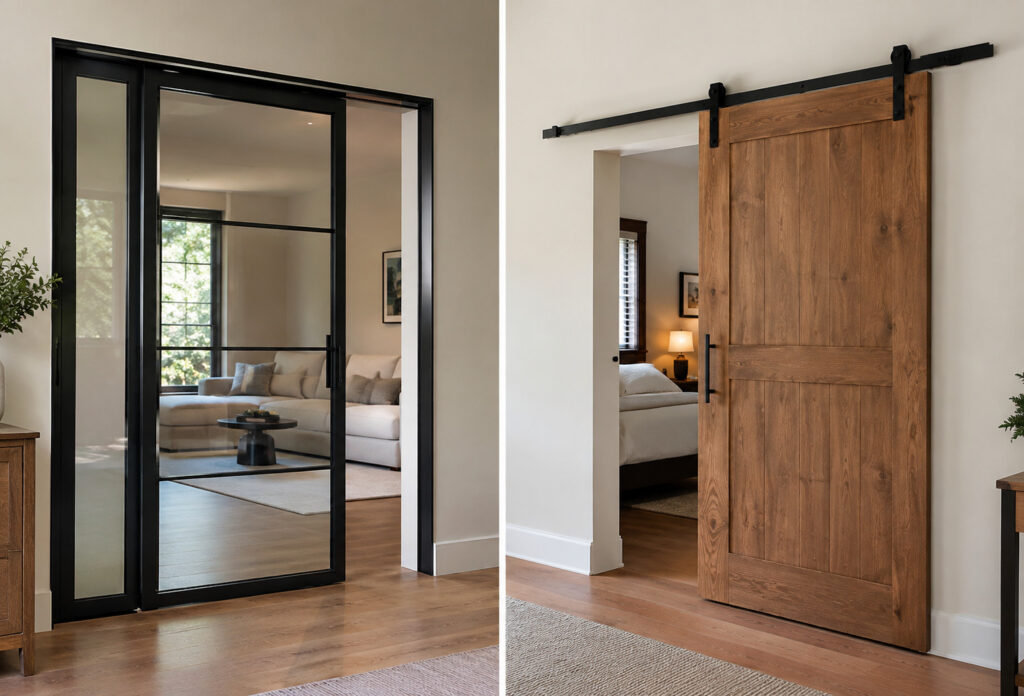
A swinging door can consume valuable floor space in a compact bathroom, narrow hallway, or small office. When every inch matters, changing the door system can make the layout more functional.
Steel sliding pocket doors and surface-mounted barn doors both eliminate the swing radius, but pocket door vs barn door space saving is managed differently. One disappears inside the wall, while the other remains visible along an external track.
Your best option depends on available wall space, renovation constraints, privacy needs, and installation costs. Understanding these differences helps you choose a door that suits your room without creating new layout problems.
Table of Contents
|
How Each Door System Saves Space
Steel Sliding Pocket Doors: The Door Disappears
Steel sliding pocket doors slide into a cavity built inside the wall. Once open, the door panel disappears from view, leaving the doorway clear.
This design of steel sliding pocket doors work particularly well in narrow hallways, compact bathrooms, closets, and small offices. It also keeps the surrounding walls available for furniture, artwork, switches, and fixtures. However, the wall must accommodate the door panel, track, rollers, and supporting frame.
Surface-Mounted Barn Doors: The Door Stays Visible
A barn door slides along a track mounted above the doorway. Because the panel travels outside the wall, installation usually avoids creating an internal cavity.
This makes barn doors attractive for renovations where opening up the wall would be expensive or impractical. The trade-off is that the door needs enough unobstructed wall space to slide fully open. Furniture, windows, and nearby doorways can limit where it works.
What is Important Steel Pocket Doors or Barn Doors?
Choosing between these systems requires more than comparing their appearance. Consider how each option affects your room, installation budget, privacy, and long-term maintenance.
Wall Space and Room Layout
Pocket doors preserve the wall area beside the doorway because the panel slides inside the wall. This makes them useful where cabinets, artwork, or adjacent openings restrict clearance.
Barn doors need an uninterrupted section of wall beside the opening. The panel must have enough room to slide completely clear of the doorway. This can limit furniture placement, particularly in narrow rooms.
A usable wall space sliding door comparison should therefore consider the entire travel path, not just the doorway itself.
Installation and Renovation Costs
Pocket doors generally involve more construction work, especially when installed in existing walls. Contractors may need to modify framing, repair drywall, and relocate electrical wiring or plumbing.
The existing wall also determines whether the installation is practical. Load-bearing walls and concealed services require careful assessment before work begins.
Barn doors usually involve less invasive installation because their tracks remain exposed. However, the mounting surface must support the door’s weight. Secure blocking or other reinforcement may be necessary, depending on the wall construction and hardware specifications.
Compare the entire installation cost rather than assuming either system is always cheaper.
Privacy, Noise, and Everyday Use
Neither door system automatically provides the sound isolation of a well-sealed hinged door. Pocket doors often have gaps around their edges, while barn doors typically sit away from the wall.
This affects conversations, bathroom privacy, and noise between adjoining rooms. A pocket door sound attenuation vs barn door comparison should consider perimeter gaps, panel construction, seals, and installation quality.
Pocket doors can support suitable privacy locks, provided the hardware matches the system. Barn doors also offer locking options, although compatibility and the remaining gaps require attention. Neither design should be treated as soundproof without suitable testing and construction.
Style, Durability, and Maintenance
Steel doors bring a clean, architectural appearance that suits contemporary, industrial, and minimalist interiors. Steel sliding pocket doors with glass can also help transfer light between rooms while maintaining a defined separation.
Pocket systems conceal much of their hardware inside the wall. This creates a streamlined finish but can make some repairs less accessible.
Barn doors display their tracks and rollers as part of the design. Their hardware becomes a visible feature, although it needs occasional cleaning, inspection, and adjustment. Steel construction, protective coatings, roller quality, and replacement-part availability all influence long-term performance.
When Should You Choose a Steel Pocket Door or a Barn Door?
The right system depends on your room’s limitations and your renovation priorities.
Choose a Steel Sliding Pocket Door If…
- You want to keep both sides of the doorway clear.
- Your layout has limited adjacent wall space.
- You prefer a streamlined finish with concealed hardware.
- Your wall can accommodate the required cavity and framing.
Choose a Surface-Mounted Barn Door If…
- You want to avoid opening up an existing wall.
- You have enough uninterrupted wall space beside the doorway.
- You want exposed hardware to contribute to the room’s design.
- You prefer a system that generally allows easier access to visible hardware.
Before choosing, inspect the wall for switches, outlets, baseboards, plumbing, and wiring. Check nearby furniture and doorways, too. These details can determine whether metal pocket door frame system will work comfortably or not.
What to Check Before Buying a Steel Sliding Door System
A suitable door needs compatible dimensions, reliable hardware, and a wall that supports its installation.
- Measure the opening: Confirm the door’s width, height, overlap, and required clearance against the manufacturer’s specifications.
- Inspect the wall: Check framing, load-bearing requirements, and concealed plumbing or electrical services before installation.
- Check the hardware: Review track capacity, roller quality, soft-close options, and replacement-part availability.
- Confirm the finish: Compare steel construction, protective coatings, glass options, and cleaning requirements.
- Plan for privacy: Check locking compatibility and the expected gaps around the closed panel.
Pay particular attention to pocket door wall cavity thickness for steel doors. The required cavity depends on the door panel, frame system, and hardware specifications. Confirm the complete assembly’s dimensions before modifying the wall.
Compare complete systems rather than door-panel prices alone. Include tracks, frames, hardware, installation, framing changes, and finishing in your budget. This gives you a more realistic picture of the total investment.
Choose the Door That Fits Your Space
Steel sliding pocket doors reclaim adjacent wall space, while barn doors offer a practical alternative when wall clearance is available. Both eliminate the swing radius, but their installation requirements and privacy performance differ. Assess your layout, renovation budget, privacy needs, and hardware quality before making a decision.
Custom Metal Windows & Doors can help you explore suitable steel sliding door systems for your project. Review your measurements and installation requirements before placing an order to avoid costly adjustments later. Reach out today.
FAQs
Are steel pocket doors better than barn doors for small rooms?
Pocket doors generally preserve more adjacent wall space. Barn doors may suit existing-wall renovations where sufficient clearance is available.
Do barn doors save more space than pocket doors?
Both pocket door vs barn door space saving features eliminate the swing radius. But pocket doors also leave the adjacent wall available for furniture and fixtures.
Are steel pocket doors difficult to install?
They require a suitable wall cavity, compatible framing, and careful hardware alignment. Existing wiring, plumbing, and structural requirements can increase installation complexity.
Do pocket doors or barn doors offer better privacy?
Neither automatically provides strong sound isolation. Suitable locks and reduced perimeter gaps can improve privacy, depending on the system.
Can you install a barn door without removing drywall?
Usually, yes. Surface-mounted systems generally avoid opening the wall, although secure mounting and wall-specific preparation may still be necessary.