



Hurricane Rated Steel Windows: Balancing Ultra-Slim Sightlines with Miami-Dade Impact Ratings
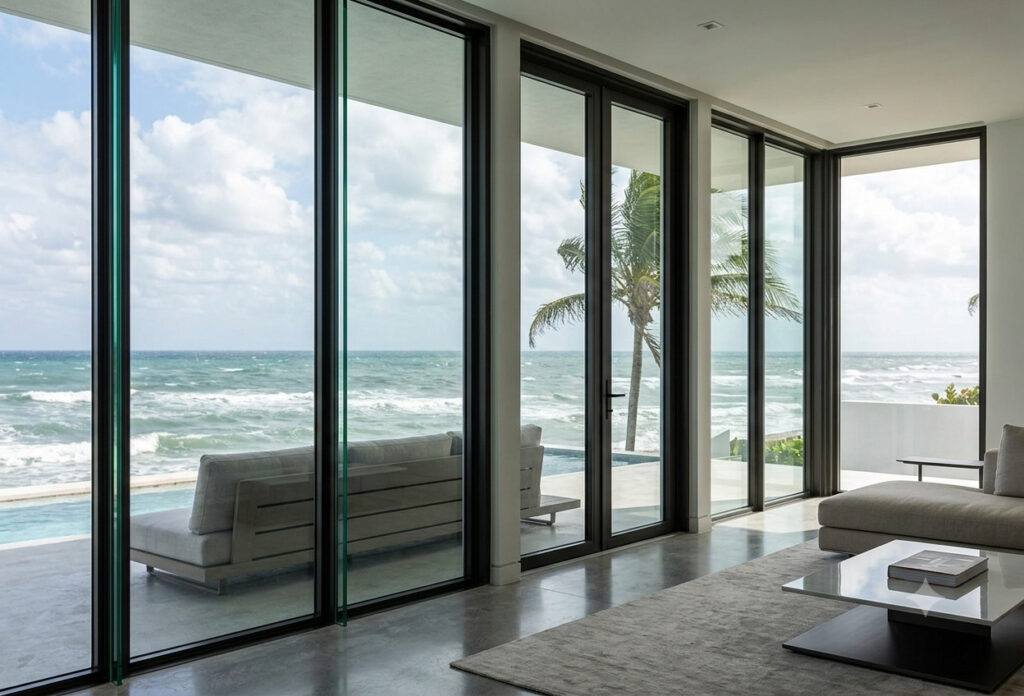
Do slim windows actually survive a hurricane, or is that just marketing? Apparently steel makes it possible.
Steel’s strength lets a manufacturer shrink the frame without weakening it. Hurricane rated steel windows can pass Miami-Dade’s testing and still look nothing like the bulky, fortress-style frames people expect from impact glass.
That’s the real shift here. Aluminum needs extra bulk for rigidity, which is why older impact windows look chunky. Steel gets its strength from the metal itself. Consequently, architects can specify floor-to-ceiling glass and pocketing doors for oceanfront homes without sacrificing code compliance.
This blog breaks down what Miami-Dade approval checks for. We’ll also cover how to spot a genuine Notice of Acceptance (NOA) rating versus a marketing label, and where steel to alternative materials.
How Thin Can a Hurricane-Rated Steel Window Be?
Steel creates narrow sightlines because it maintains strength and stiffness even in slender sections, making it ideal for large expanses of glass.
But the thinnest possible frame isn’t always the thinnest approved frame for your specific project. A small fixed window and a large coastal picture window carry very different structural demands. The final profile depends on:
- Window dimensions and glass size/thickness
- Fixed oe operable configuration
- Number of panels, mullions, and meeting rails
- Required design pressures and impact rating
- Approved anchoring method
That’s why manufacturers quote the finished sightline for the actual opening rather than a single profile for every project. For slim line impact resistant picture windows, you’re specifying a tested system that happens to look exceptionally slim, not just buying a thin frame.
Why Does Steel Work So Well For Large Coastal Glass?
Less framing means more visible glass, valuable for floor-to-ceiling windows, oversized fixed panels, and rooms built around coastal views. Steel’s stiffness-to-slenderness ratio helps here, but material strength alone doesn’t determine panel size.
Choose steel when narrow sightlines and high frame stiffness are design priorities. Choose aluminum when a proven aluminum system already meets your opening size, pressure, and design goals. Either way, compare the tested system, not the raw material. There’s no rule that steel automatically outperforms aluminum on every larger panel.
What Makes a Steel Window Hurricane-Rated in Miami?
Impact glass alone doesn’t make Hurricane rated steel windows. The full assembly, frame, glazing, hardware, connections, anchors, installation, must meet the required performance. Miami-Dade’s approval system lists each product’s impact rating and maximum positive/negative design pressures.
So “hurricane window” and “impact-rated” aren’t enough on their own. Check the approval record for:
- NOA or product approval number
- Impact classification and design pressures
- Approved configuration, glass specification, mullion requirements, and anchoring details
Miami-Dade permit plans must include product approval numbers, opening sizes, required pressures, and glass/mullion information. The approval defines what the tested product is actually allowed to do.
What Does HVHZ Mean for Impact Steel Windows?
HVHZ (High Velocity Hurricane Zone) covers specific high-wind requirements in South Florida. HVHZ impact steel windows must meet the tests and approvals required for their intended use. Miami-Dade references procedures like TAS-201, TAS-202, and TAS-203, and allows comparative analysis for certain approvals under defined conditions.
Don’t assume Hurricane rated steel windows approved elsewhere in Florida automatically meets Miami-Dade requirements. Establish your project’s required wind pressures first, then match them to an approved configuration.
How Do You Compare Steel and Aluminum Impact Windows for Large Glass?
The real comparison isn’t steel versus aluminum. It’s which tested system handles your opening at the sightline you want. Frame stiffness, glass construction, mullions, hardware, and anchoring all shape the result. Ask for:
- Maximum approved panel dimensions and design pressure ratings
- Impact classification and glass construction
- Mullion requirements and finished sightline
- Anchoring method, thermal performance, and coastal corrosion specs
A DP60 design pressure rating steel windows is a pressure rating, not proof a window suits every building. Calculate the required design pressure for your project, then compare it to the product’s approved rating.
Will Steel Window Frames Corrode Near the Ocean?
They can, unless the frame, finish, hardware, fasteners, and detailing are specified for coastal exposure. Salt air introduces chlorides that accelerate corrosion, especially around hardware, fasteners, joints, and damaged finishes.
“Stainless steel” alone is too vague. Confirm the grade, corrosion-resistant hardware, compatible fasteners, protective finish, drainage, isolation between dissimilar metals, and maintenance requirements.
Why is 316 Stainless Steel Better Suited to Coastal Exposure?
316 stainless contains molybdenum, which resists the pitting and crevice corrosion salt air causes. That’s why coastal projects default to it. It isn’t corrosion-proof, though.
Specify marine-grade 316 stainless steel, not galvanized carbon steel, for exposed components in salt zones. Even 316 can fail if water traps, incompatible metals, poor finishing, or skipped maintenance are built into the install.
How Do Thermally Broken Steel Windows Reduce Condensation?
A thermal break slows heat transfer through the frame, keeping interior surfaces warmer, important in humid climates where warm, moist air meets cooler frame surfaces. Modern systems separate the interior and exterior frame with a barrier that slows heat flow, but condensation still depends on the whole system, glazing, indoor humidity, and outdoor conditions.
For thermally broken stainless steel window frames, ask for actual thermal and condensation performance data rather than assuming “thermally broken” guarantees a result. On high-end coastal windows, condensation is a comfort and finish issue, not just an energy one.
What Should You Check Before Approving a Slim Steel Window?
Start with the approval, then the appearance. Verify opening size, approved configuration, design pressures, impact classification, glass spec, finished sightline, mullion/meeting-rail dimensions, hardware, frame material and finish, thermal-break construction, and installation/anchoring details.
Then look at how the window will actually appear. Brochures highlight the narrowest frame section, but your finished opening also has corners, mullions, meeting rails, glazing beads, and hardware that shape what you see from inside.
How Do Architects Get Custom Steel Windows Approved in Florida?
Start with your project’s required pressures and building rules before finalizing the window. Miami-Dade permits must list window sizes, product approval numbers, required pressures, and glass/mullion details, signed and sealed by a design professional.
For a custom project:
- Set the design pressure each opening must handle.
- Select a tested system matching the proposed configuration.
- Check the applicable NOA or Florida Product Approval.
- Confirm approved size, glass, mullions, and anchoring.
- Coordinate details with the architect and engineer.
- Resolve any configuration outside the approval before fabrication.
If a custom window falls outside the tested configuration, don’t assume the manufacturer can “make it work.” Work with the relevant authority on the right engineering or approval path.
What Should a Hurricane-Rated Steel Window Quote Include?
A useful quote tells you what you’re buying, not just the cost. Ask for window dimensions and configuration, glass type/thickness, impact classification, design pressure rating, NOA/product approval, finished sightline, frame material and finish, hardware, thermal-break details, and installation/anchoring scope.
If a quote leaves these unclear, you can’t compare it fairly. A cheaper price may simply reflect a different glass package, configuration, approval, finish, or installation scope. Compare specifications first, price second.
So, Can Slim Steel Windows Handle Miami Hurricanes?
They can, if the specific system is tested and approved for the required impact and design pressures. Choose Hurricane rated steel windows not because the profile looks thin, but because the approved system delivers the required performance at the sightline your architecture demands. That’s how you get expansive coastal glass without treating hurricane protection as an afterthought.
For custom projects, Custom Metal Windows & Doors can help you explore steel window configurations around your project’s architectural and performance requirements. Start with your opening, required pressures, and desired sightline.
FAQs
How thin can a steel window frame be while maintaining impact resistance?
It depends on the tested system, opening, glass, configuration, and design pressure. Ask for the approved sightline for your actual opening rather than a generic frame-width claim.
Can slim steel windows meet Miami-Dade impact requirements?
Yes, when the specific system is tested and approved for the required configuration and pressures matching your size, glass, and anchoring.
Is impact glass enough to make a window hurricane-rated?
No, the frame, glazing system, hardware, anchors, and installation must also meet the required performance under the product’s Miami-Dade approval.
Will custom steel window frames rust or corrode in salt air?
They can if the material, finish, hardware, and detailing aren’t suited to coastal exposure. Specify corrosion-resistant materials like 316 stainless steel for heavy salt exposure.