



How Do Steel and Aluminum Awning Windows Protect Luxury Homes from Heavy Rain?
Heavy rain tests a home in ways that sunny weather never does. Wind-driven water finds every small gap and slowly causes stained walls, warped sills, and costly work.
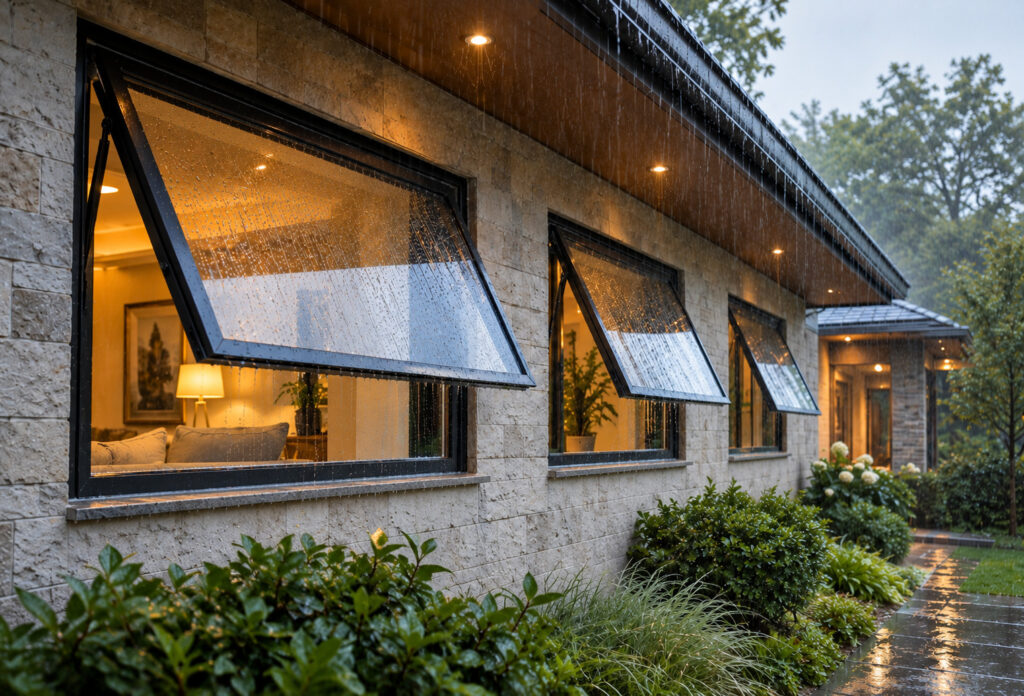
Steel and aluminum awning windows are built to prevent that. They hinge at the top and open outward, so the open window acts like a small roof, letting fresh air in while rain runs off and away from your home. Strong metal frames and tight seals keep water out and hold up season after season.
In this blog, we’ll explain how these windows work, why metal frames stand up so well to wet weather. And what to look for if you want your home to stay dry, comfortable, and well-ventilated.
Table of Content
|
How Awning Windows Keep Heavy Rain Outside
An awning window has a sash hinged along its top edge. When opened, the bottom of the sash moves outward while the top remains fixed.
That outward opening rain protection windows gives a useful advantage during rain. The angled sash can act as a small overhang, helping direct water away from the opening below.
It can also allow ventilation during light or moderate rain when conditions are suitable. However, the opening style is only one part of the system.
Window seals, drainage paths, frame joints, glazing, and installation all affect water resistance. A well-designed awning window still needs properly sealed connections and controlled drainage.
What Happens During Wind-Driven Rain?
Wind-driven rain creates a tougher test because water can hit the window horizontally. Strong gusts can push moisture toward joints, seals, and other vulnerable areas.
Quality weatherstripping helps limit water entry around moving sections. Sealed corners and effective drainage channels give trapped moisture a controlled path away from the interior.
Installation is just as important. Proper flashing, sealing, and sill preparation help the window perform as intended during severe weather.
Why Steel Awning Windows Work Well in Luxury Homes
Steel is valued for its structural strength, which makes it particularly attractive for demanding architectural applications. Strong frames can support substantial glass while maintaining refined proportions.
That is important in luxury homes where expansive views and natural light often shape the design. Slim sightlines can preserve a cleaner connection between the interior and surrounding landscape.
Steel also offers excellent durability when properly protected against corrosion. The protective finish becomes especially important in homes exposed to frequent moisture, coastal air, or demanding weather.
Buyers should therefore ask about the steel grade, protective treatment, coating system, and expected maintenance. The material alone does not determine long-term performance.
When Aluminum Has an Advantage
Aluminum is naturally resistant to rust, making it a practical option for homes exposed to moisture. Its lighter weight can also simplify handling and operation, particularly with larger window assemblies.
Maintenance is another advantage. Quality aluminum frames can provide long-term performance without the same corrosion concerns associated with unprotected steel.
Thermal performance requires close attention, however. Aluminum conducts heat readily, so buyers should look for thermally broken frames when energy efficiency and indoor comfort are important.
A thermal breaks separates the interior and exterior portions of the frame with an insulating material. This reduces direct heat transfer through the metal.
For many homeowners, aluminum offers a useful balance of weather resistance, modern aesthetics, lighter construction, and manageable upkeep.
Look Beyond the Metal
Comparing steel and aluminum alone can leave out the details that determine real-world performance. The complete window specification deserves equal attention.
Check the glass, glazing system, weather seals, drainage design, hardware, frame finish, and installation methods. These components work together to create the finished weather barrier.
A premium frame cannot compensate for weak seals or poor installation. The strongest material still needs a properly engineered window system around it.
Steel vs. Aluminum Awning Windows: What Should You Buy?
| Factor | Steel | Aluminum |
| Structural Strength | Excellent | Very good |
| Corrosion resistance | Depends on coating and protection | Naturally strong against rust |
| Frame weight | Heavier | Lighter |
| Sightlines | Can be very slim | Slim, depending on system |
| Maintenance | Requires coating protection | Generally low maintenance |
| Thermal performance | Depends on system | Look for thermal breaks |
| Luxury design | Excellent for premium architectural styles | Excellent for modern designs |
Neither material automatically wins for every luxury home. The right choice depends on the conditions surrounding the project.
Consider how much rain the home receives and whether it sits near the coast. Frame dimensions, thermal goals, architectural style, and maintenance expectations should also influence the decision.
Large openings may place greater demands on frame strength and hardware. Homes in humid or coastal environments may require closer attention to corrosion protection and finishes.
The best window is not simply the strongest or lightest option. It is the system engineered for the home’s actual exposure.
5 Features to Check Before Ordering Awning Windows
Buying the right frame material is only the beginning. Use this checklist before placing an order.
Weather Seals and Drainage
Ask how the window channels water away from the frame and sill. High-quality weatherstripping and sealed joints can help limit unwanted water entry.
Also ask where water goes if moisture reaches the internal drainage path. A clear drainage strategy is important for rainproof architectural windows for luxury homes.
Glass and Glazing
Consider insulated glazing when energy efficiency and indoor comfort are priorities. The right glazing configuration can also influence condensation control and overall window performance.
Ask about glass thickness and glazing specifications for your home’s climate. Large panes may also require specific glass and structural considerations.
Hardware and Operating Mechanism
Check the hinges, locking points, and operating mechanism before ordering. These components need to withstand repeated use without compromising the sash seal.
Large awning windows deserve extra attention. Confirm that the hardware is rated for the sash size, weight, and intended operating conditions.
Some buyers may also prefer multi point locking leak prevention windows because multiple points can help pull the sash evenly against its seals.
Finish and Corrosion Protection
Steel requires suitable protective treatment to reduce corrosion risk. Ask about the coating system, finish quality, and recommended maintenance.
Aluminum also needs a durable finish, particularly when exposed to demanding environmental conditions. Confirm that the selected finish suits the home’s location.
Installation
Even a high-performance window can leak when installation is poorly executed. Ask how the supplier handles flashing sealing, drainage, and connection details.
The installation should complement the window’s design rather than undermine it. Proper preparation around the opening is part of the window’s weather protection.
Final Verdict
Heavy-rain protection comes from several components working together. Window design, frame material, glazing seals, drainage, hardware, and installation all play a role.
Steel can be an excellent choice for premium structural detailing and slim architectural profiles. Aluminum can offer lower maintenance, strong moisture resistance, and flexible modern styling.
Rather than choosing based on material alone, compare the complete specifications against your home’s exposure and window sizes. If you’re planning a high-end project, request a quote from Custom Metal Windows & Doors based on your performance requirements and architectural goals.
FAQs
Are steel or aluminum windows better for rainy climates?
Both can perform well when properly engineered and installed. Aluminum offers strong moisture resistance, while protected steel provides strength and refined architectural detailing.
Can Awning windows be left open during rain?
They can often remain partially open during lighter rain, depending on the window design and weather conditions. Strong wind-driven storms require greater caution.
Do aluminum awning windows rust?
Aluminum does not rust like steel because it does not contain iron. However, finishes, hardware, and surrounding components still require appropriate care.
Are steel awning windows more expensive?
Pricing depends on the complete specification rather than material alone. Frame dimensions, glass, finish, hardware, system design, and installation can all affect the final cost.